Cable vs Glass Railing: Cost, Pros & Cons
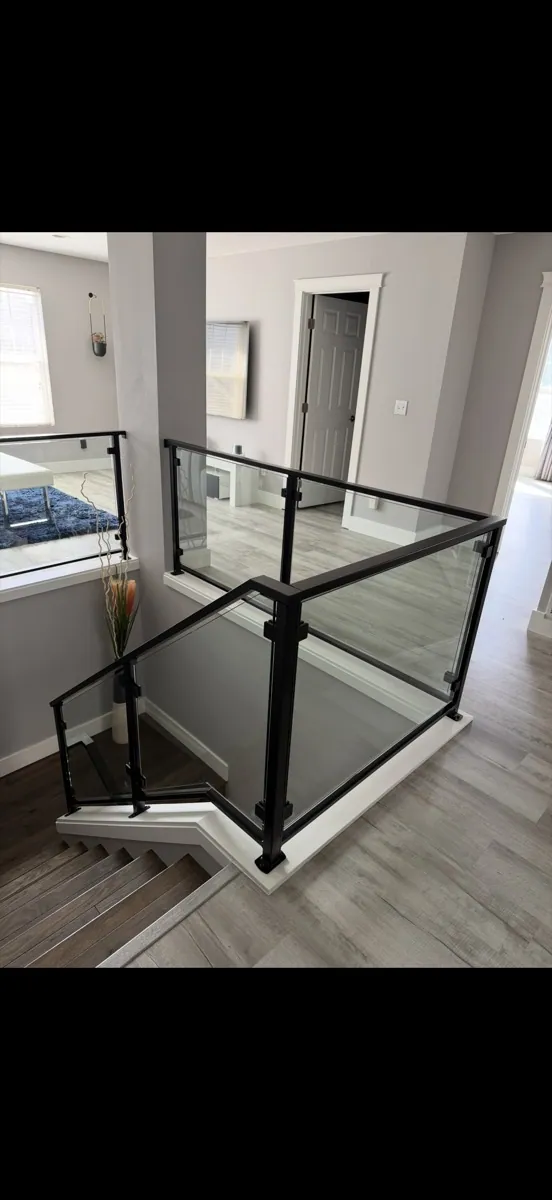
Cable and glass are the two most popular modern stair railings in Seattle right now. Both keep a space open and bright — the difference comes down to views, maintenance, and budget. Here's how to choose.
Quick comparison
| Cable Railing | Glass Railing | |
|---|---|---|
| Look | Minimal, industrial-modern | Seamless, luxury, frameless |
| Views | Very open (thin lines) | Unobstructed (clear panels) |
| Cost | $ — more affordable | $$ — higher-end |
| Maintenance | Occasional tension check | Glass needs regular cleaning |
| Best for | Modern & transitional homes | High-end, view properties |
Cable railing — pros & cons
Stainless cable railing uses thin horizontal cables between posts. It's the most-requested modern look because it's clean, doesn't block light, and costs less than glass.
- Pros: affordable, airy, durable stainless hardware, works indoor and on decks.
- Cons: cables need correct tensioning (a job for a pro to meet code), and the horizontal lines aren't ideal in every design.
Glass railing — pros & cons
Glass railing uses tempered panels, framed or frameless. It's the premium choice for homes with a view you don't want to interrupt.
- Pros: completely unobstructed sightlines, luxury feel, blocks wind on decks.
- Cons: higher cost, shows fingerprints and needs regular cleaning.
Which should you choose?
If you want a modern look on a sensible budget, cable railing is usually the winner. If you have a view to frame and want a high-end, seamless finish, glass is worth the premium. Both meet Washington code when installed properly — spacing, tension and structural support all matter, which is why pro installation is important.
Not sure which fits your home? We'll show you samples and give an honest recommendation based on your space and budget. See all our stairs & railing options.
Get a free railing estimate
Cable, glass, iron or wood — 5.0★, licensed & insured, 1-hour response.